
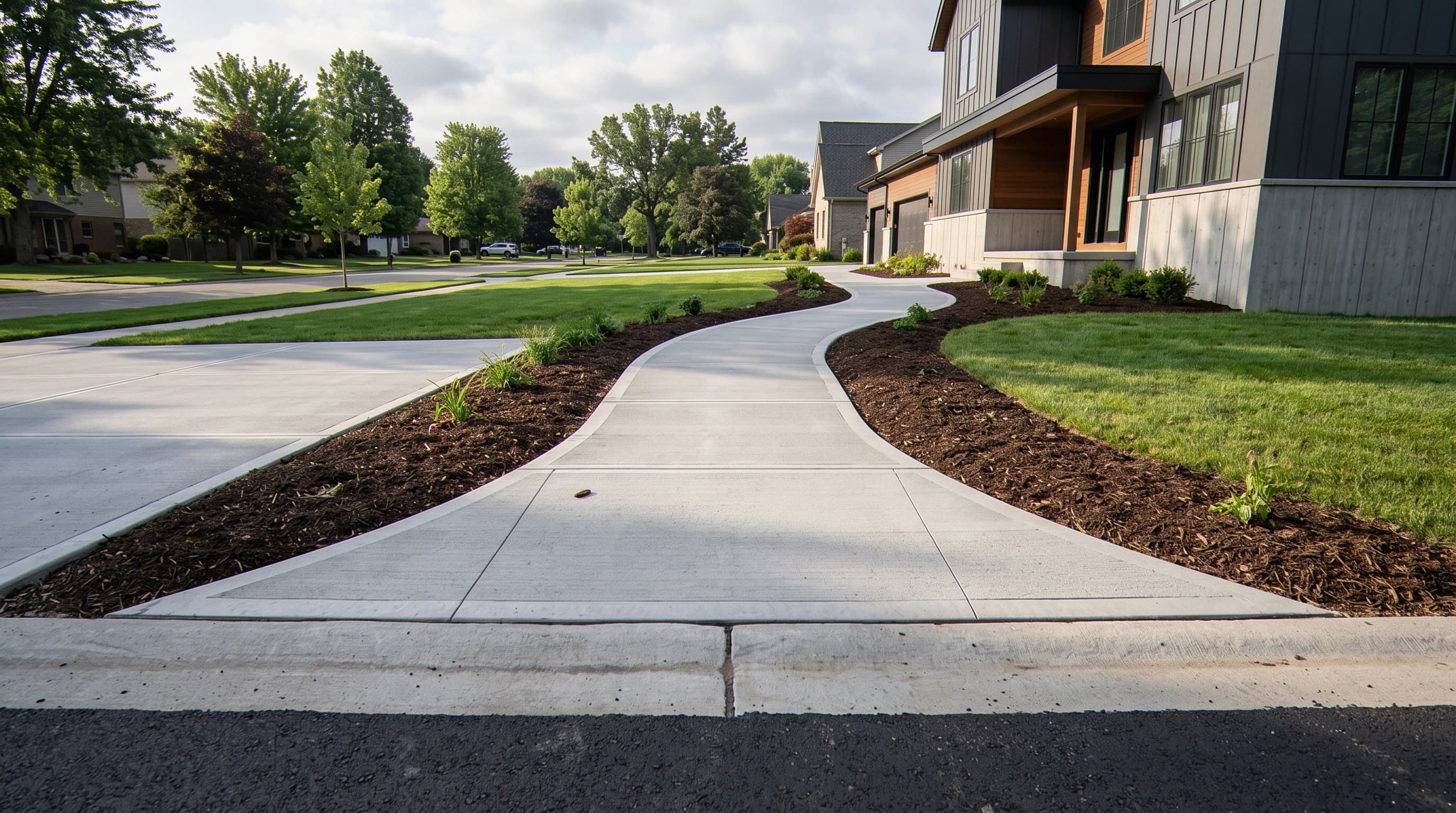
Sidewalks & Walkways · Dayton

Concrete Sidewalks and Walkways Built to Last in Dayton, OH

We pour new walks, swap out cracked panels, and shape front paths across Dayton. One call reaches the crew, not a phone menu.

Free Sidewalks & Walkways quote.

Tell us about the job. We reply within one business hour.

Your information is kept private. No spam, ever.

What we install

Walkways That Hold Their Line Through Dayton Winters

Your walkway is the first thing a guest steps on. In Dayton it takes a beating all year. Our winters swing above and below freezing again and again, and the road salt after each snow works into any weak spot. Water slips into thin concrete, freezes overnight, and lifts the panels until the seams sit crooked. We pour walks that stand up to that push and pull. Our crew runs the full job, from breaking out the old slab to floating the fresh top. When a path has only settled, we can lift and level the concrete you already have instead of tearing the whole run out.

Every good walk begins under the surface. We dig down to solid subgrade, then lay and pack a stone base and pitch the path so rain runs off to the grass rather than pooling on top. Next we set the forms, place the steel or mesh, and pour to a depth that carries steady foot traffic without flexing. A lot of failed walks in older Dayton neighborhoods trace back to a tree root or a pocket of soft clay under one panel. We read the ground first and settle those trouble spots before a single wheelbarrow rolls, so your new path stays true.

  • Full tear out and haul away of the broken walk, leaving no rubble behind.
  • Packed stone base and a steady pitch that sends water off the surface.
  • Control joints spaced to steer any cracking to lines you will not notice.
  • Broom finish that keeps its grip when the path is wet, icy, or snowy.
  • One crew from first cut to final trowel, so no step gets dropped.
A safe walk is a flat walk, so we track down the root or soft clay before we pour.

Most Dayton walkways we replace go bad for a short list of reasons. The base was too thin, a maple root shoved a panel up, or water sat where it had no way to drain. Before we quote the job we study the whole path, not just the cracked square. A slab that heaves near the porch or dips beside a downspout tells us exactly what the soil is up to. We fix the reason it failed, so the walk we pour keeps sitting flat.

If your Dayton sidewalk is cracked, lifted, or a trip risk by the front steps, call us and we will come take a look. We pour new front walks, replace public sidewalk panels, and wind garden paths through the yard. You talk straight to the crew that does the work, and we lock in the visit fast.

Materials

Walkway Finishes and Path Choices

Plain gray concrete is still the workhorse for Dayton walkways, and it earns the title. It is strong, it shrugs off our long run of freezing and thawing, and it gives you a clean path for decades when the pour is done right. Most walks we set carry a light broom finish, which adds just enough texture to hold your footing when the surface is wet or dusted with snow. From there you have plenty of room to dress it up.

Want a bit more character underfoot? We can press a pattern into the top, tint the mix a warmer shade, or wash the surface to bring out the stone for a pebbled look. A wider front walk feels more welcoming, and a soft curve breaks up a plain straight run to the door. Each choice nudges the timeline and the final look, so we walk you through what suits your home and how your family uses the yard.

  • Broom finish: the standard textured top that grips in rain, ice, and snow.
  • Exposed aggregate: washed to reveal the stone for a rugged, low glare path.
  • Stamped and colored: patterns pressed into wet concrete for a custom face.
  • Wider or curved walks: extra width or a gentle bend that guides guests in.
What about the alternatives?

Walkway Surfaces Compared for Dayton

Folks around Dayton often ask how poured concrete stacks up against the other walkway surfaces they see up and down the street. Here is how the common picks hold up in our clay soil and our salted winters.

Poured concrete

Takes our freezing and thawing in stride, stays flat underfoot, and runs for decades with little fuss. It is our first pick for most Dayton front walks and sidewalks.

Recommended

Stamped concrete

The same solid slab wearing a decorative face. It asks for resealing down the road and costs a bit more, yet it looks sharp next to the right home.

Acceptable

Paver walkway

Good looking and easy to lift and patch, though the joints invite weeds and slow settling, so the path wants regular attention.

Acceptable

Brick path

Warm and classic in tone, but the mortar and bricks tend to work loose as our ground swells and shrinks through the freeze season.

Acceptable

Gravel path

Cheap to spread, yet it scatters into the lawn, ruts under every step, and turns to soup through a wet Dayton spring.

Skip

Loose stepping stones

A shortcut with no real base beneath it. The stones rock, tip, and heave, which leaves you an uneven and risky path.

Skip
How it goes

From quote to walk-on, fast.

1

Free walk-through

A short on-site visit. We look at the job in person and write a fixed quote on paper, not over the phone.

2

Prep the surface

The slow, unglamorous step most shortcuts skip. Done right here so the finish actually holds.

3

Do the work

A local crew runs the job in the order that lasts, with the materials named in the quote.

4

Walk it together

We hand the work back with a final walk-through, so you see exactly what was done and why.

Before you book

Straight Answers Before You Pour

We hear the same worries from Dayton homeowners before a walkway job starts. Here are honest answers so you know just what to expect from our crew.

How soon can I walk on the fresh concrete?

Concrete gains the bulk of its strength in the first few days, then keeps hardening for weeks after. We ask you to stay off the surface for about a day while it sets up. For daily use with pets and kids we like to give it a little longer. Before we pack up, we hand you the exact timing for your own pour.

Is my new walkway going to crack?

Every slab shifts a touch as it cures and as the seasons turn. That is why we cut control joints, which hand the concrete planned spots to crack down low where you will not spot them. Set on a real base with the right spacing, a walk should hold flat and tight for many years. We build to keep cracking in check, never to pretend it cannot happen.

Do you fix sidewalks pushed up by tree roots?

Yes, and it is one of the calls we get most in the older tree lined parts of Dayton. A root under a panel lifts it and leaves a lip that grabs a toe. We pull the raised slab, clear the root path, and pour a fresh panel that sits flush with the rest. Where we can, we save your tree while we hand you a level walk.

How fast can you start in Dayton?

Timing leans on the season and the weather, since we pour when the temperature lets the concrete cure the right way. Once you call, we come out to measure and talk through the work, then give you a real date. We will not leave you hanging. The same crew that quotes the job is the one that shows up to pour it.

Do I need a permit for a sidewalk along the street?

Work in the public strip by the curb can carry city rules on width, slope, and finish. We know the panels the city checks and we build to those marks. If your job touches the public walk, we help you sort the paperwork so the finished path clears inspection without a repeat visit.

Can you match a new panel to my old walk?

Often we can. If most of your walk is sound and only a stretch has failed, we tear out the bad panels and pour fresh ones that tie in at the joints. We match the width and the finish as close as concrete allows. When too much of the path is crumbling, we will tell you plainly that a full replacement is the smarter move.

Aftercare

Keeping Your Dayton Walkway Safe

A concrete walk asks very little of you, but a few simple habits stretch its life and keep it safe to cross. The two things that wear Dayton walkways down fastest are water and salt. Keep water moving off the top and go light on the ice melt, and the path will stay level and clean far longer. Here is what we tell every homeowner once the pour is done.

  • Reseal the surface every couple of years to slow water soaking into the slab.
  • Go easy on rock salt and harsh ice melt, which eat at the top all winter.
  • Reach for a plastic shovel and lift the snow instead of scraping the finish.
  • Aim downspouts and grade the soil so water never gathers along the walk.
  • Fill a small crack early with a flexible sealant before frost pries it wider.
  • Trim nearby roots and keep heavy planters off the edge so nothing lifts a panel.
FAQ

Sidewalk Questions from Dayton Homeowners

Ready for a quote in Dayton?

Send a few photos or book a free on-site walk-through. A fixed written quote within one business day.

CallFree quote