
Concrete Patios · Dayton

Concrete Patios in Dayton, Ohio

A flat, solid patio our crew pours to fit your yard, your budget, and the way Dayton weather actually behaves.

Free Concrete Patios quote.

Tell us about the job. We reply within one business hour.

Your information is kept private. No spam, ever.

What we install

Patios built for Dayton backyards

A good patio starts with the ground under it. Around Montgomery County we deal with clay heavy soil that swells when it rains and shrinks when it dries, so we grade and compact the base before a single bag of mix shows up. Skip that step and you get a slab that tips toward the house or cracks along the seams within a couple of winters. We would rather spend the extra hour on prep than come back to fix a heave line next spring. Our crew pours patios across Dayton, Kettering, Centerville, and the neighborhoods in between, and every one gets the same base work.

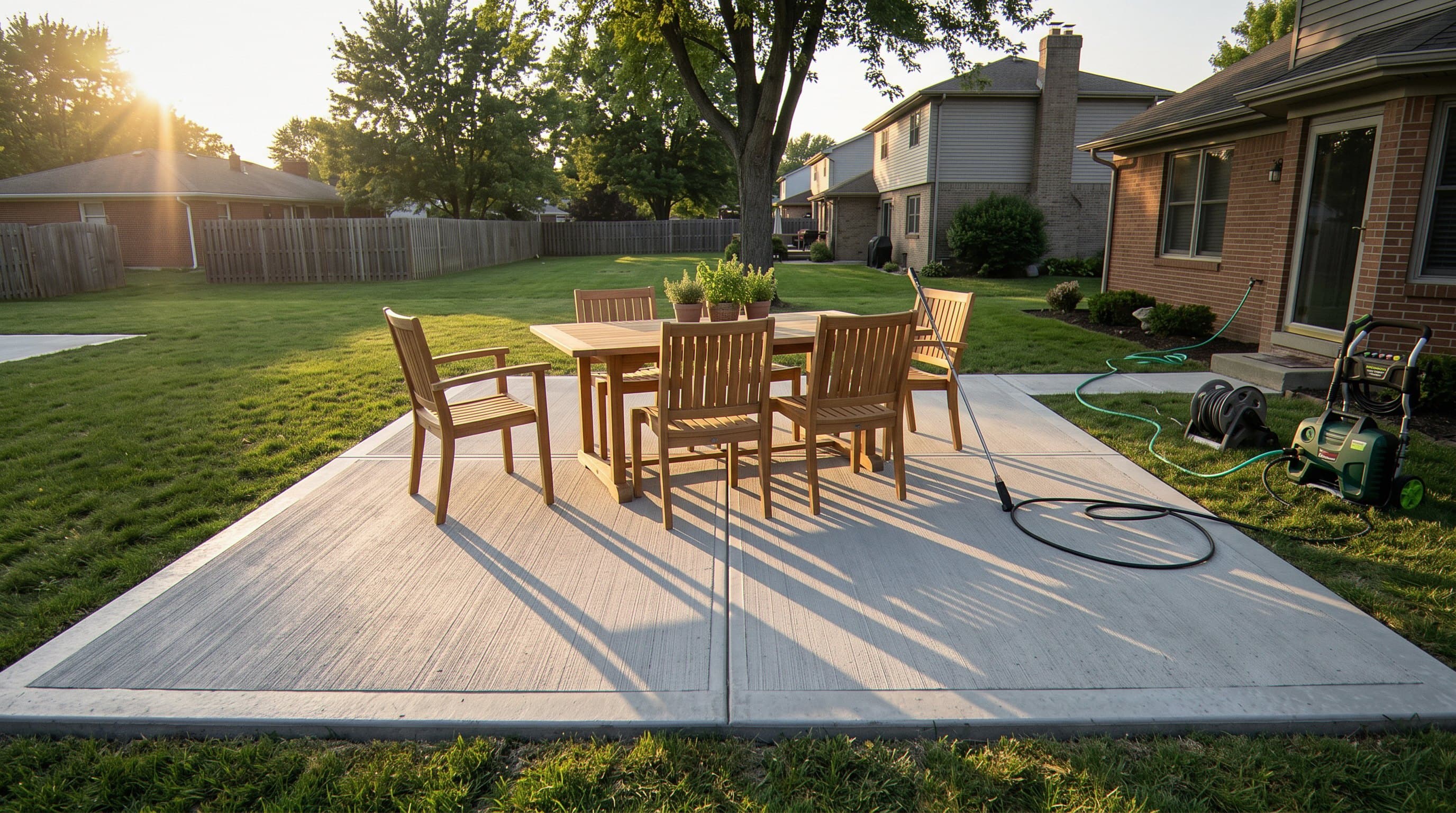
Concrete gives you a patio that holds its shape season after season. It does not rot like a wood deck, it does not shift like loose pavers, and it shrugs off the weight of a grill, a table, and a full set of chairs without a wobble. You can leave it plain with a clean broom finish, or we can add color and a stamped texture that reads like stone or brick. Either way you get one solid surface that stays put when the ground freezes in January and thaws in March.

  • Poured on a compacted base so it stays level through Dayton winters
  • One solid surface, no gaps for weeds or ants to push through
  • Handles freeze and thaw without the cracking cheap slabs get
  • Finish options from plain broom texture to stamped stone looks
  • Sealed against pool splash, rain, and winter road salt tracked in
We treat the base like it matters, because in Dayton clay it is the whole game.

Most backyard patios take our crew a few days from the first cut to the last pass with the float. We form the shape, set the slope so water runs away from your foundation instead of pooling at the door, and pour a slab thick enough to carry real furniture and foot traffic. Then we control where it cracks. Concrete always moves a little as it cures, so we tool clean joints into the surface that guide any hairline where you will barely notice it. That is the difference between a patio that ages well and one that maps out in random lines by year two.

If you have been staring at a patch of muddy grass wishing it were a place to sit, we can help you picture what fits. Call us and tell us how you want to use the space. We will walk the yard, talk through finish and layout, and give you a straight read on what the job takes. No pressure, no runaround, just the crew that will actually pour it answering your questions.

Materials

What we pour and how we finish it

Every patio we build starts with the same core mix, a blend of cement, sand, stone, and water proportioned for strength in our climate. What changes is the finish. A broom finish is the plain, practical choice, a light texture swept across the top that gives grip when the surface is wet and hides the odd scuff. It is the look most Dayton backyards have worn for decades, and it lasts. For folks who want more, we work color into the mix or across the surface and press patterns that echo flagstone, slate, or brick.

The choice usually comes down to how the patio will live. A busy family space that takes bikes, coolers, and muddy shoes does great with a sealed broom finish that cleans up fast. A quiet sitting area off the back door is where a stamped, colored surface earns its keep, giving you the look of stone without the wobble and weed lines that come with loose pavers. We talk through both when we walk your yard so the finish matches how you actually plan to use it.

  • Broom finish: grippy, low fuss, the workhorse of Dayton patios
  • Stamped and colored: stone or brick look poured as one solid piece
  • Exposed aggregate: a pebbled top with natural grip and a rich texture
  • Sealed surface: shrugs off salt, grease, and standing rain
What about the alternatives?

Patio surfaces compared for Dayton yards

Concrete is not the only way to build a patio, so here is an honest read on the common options and how they hold up through a Montgomery County winter.

Poured concrete

One solid slab on a compacted base. It handles freeze and thaw, carries heavy furniture, and takes any finish you want. This is our pick for most yards.

Recommended

Stamped concrete

All the strength of a poured slab with a stone or brick pattern pressed in. It costs a bit more in labor but skips the shifting and weeds of pavers.

Acceptable

Interlocking pavers

Individual units that look sharp on day one. They can settle unevenly in clay soil and let weeds creep through the joints over time.

Acceptable

Mortared brick

A classic look with real charm. Mortar joints can crack in our freeze and thaw swings and it asks for more upkeep than a poured slab.

Acceptable

Gravel patio

Cheap and quick, but it scatters, tracks into the house, and turns to mud where Dayton clay holds water.

Skip

Wood deck at grade

Warm underfoot but it rots, needs staining every few seasons, and does not belong flat on damp ground.

Skip
How it goes

From quote to walk-on, fast.

1

Free walk-through

A short on-site visit. We look at the job in person and write a fixed quote on paper, not over the phone.

2

Prep the surface

The slow, unglamorous step most shortcuts skip. Done right here so the finish actually holds.

3

Do the work

A local crew runs the job in the order that lasts, with the materials named in the quote.

4

Walk it together

We hand the work back with a final walk-through, so you see exactly what was done and why.

Before you book

Straight answers before you commit

You have questions before you spend money on your yard. Here are the ones we hear most from Dayton homeowners, answered plainly.

Will a concrete patio crack?

Every concrete surface moves a little as it cures and as the seasons swing. The trick is controlling where. We tool clean joints into the slab so any hairline follows a line you barely see, not a random break across the middle. Paired with a solid compacted base, a patio we pour should stay flat and tight for the long haul.

Can you pour over my old patio?

Sometimes, if the existing slab is sound and sitting flat. More often the smarter move is to break out the old one, fix the base, and pour fresh. A new slab over a failing one just inherits its problems. We will tell you honestly which way your patio should go after we look at it.

How thick should the slab be?

For a patio carrying furniture and foot traffic, we pour four inches over a compacted base, and thicker where a hot tub or heavy fixture is going. Thickness alone does not make a patio last though. The base under it matters just as much, which is why we never rush the grading.

How fast can you start in Dayton?

It depends on the season and how booked we are, but we move quickly once you call. We can usually walk your yard within a few days, and pours run through most of the year here. A hard cold snap can push a pour by a day or two, since fresh concrete needs to cure above freezing to reach full strength.

Do I need a permit?

For a ground level patio that is not attached to the house, many Dayton area jobs do not, but rules vary by township and by how close you build to a property line. We know the local process and will flag anything that needs a permit before we break ground, so nothing stalls partway through.

What if my yard slopes or holds water?

That is common around here and it is fixable. We grade the base to carry water away from your foundation and, where needed, build the slab up or add a drain so rain does not pool at your door. A patio done right actually improves how water moves through your yard.

Aftercare

Keeping your patio looking new

A poured patio asks for very little, which is half the reason folks choose it. A few simple habits keep it looking sharp for decades, and none of them take more than a few minutes here and there. The big one is sealing. A fresh coat every couple of years shields the surface from winter salt, grease, and the freeze and thaw that works on any concrete around Dayton.

  • Rinse off leaves and dirt with a hose or a push broom now and then
  • Reseal every couple of years, more often for stamped or colored tops
  • Skip the harsh deicers in winter, a little sand gives grip without eating the surface
  • Wipe grease and grill drips before they set into the finish
  • Keep planters and heavy pots moving so they do not stain one spot
  • Call us early if you spot a joint opening up, small fixes stay small
FAQ

Patio questions we hear around Dayton

Ready for a quote in Dayton?

Send a few photos or book a free on-site walk-through. A fixed written quote within one business day.

CallFree quote