
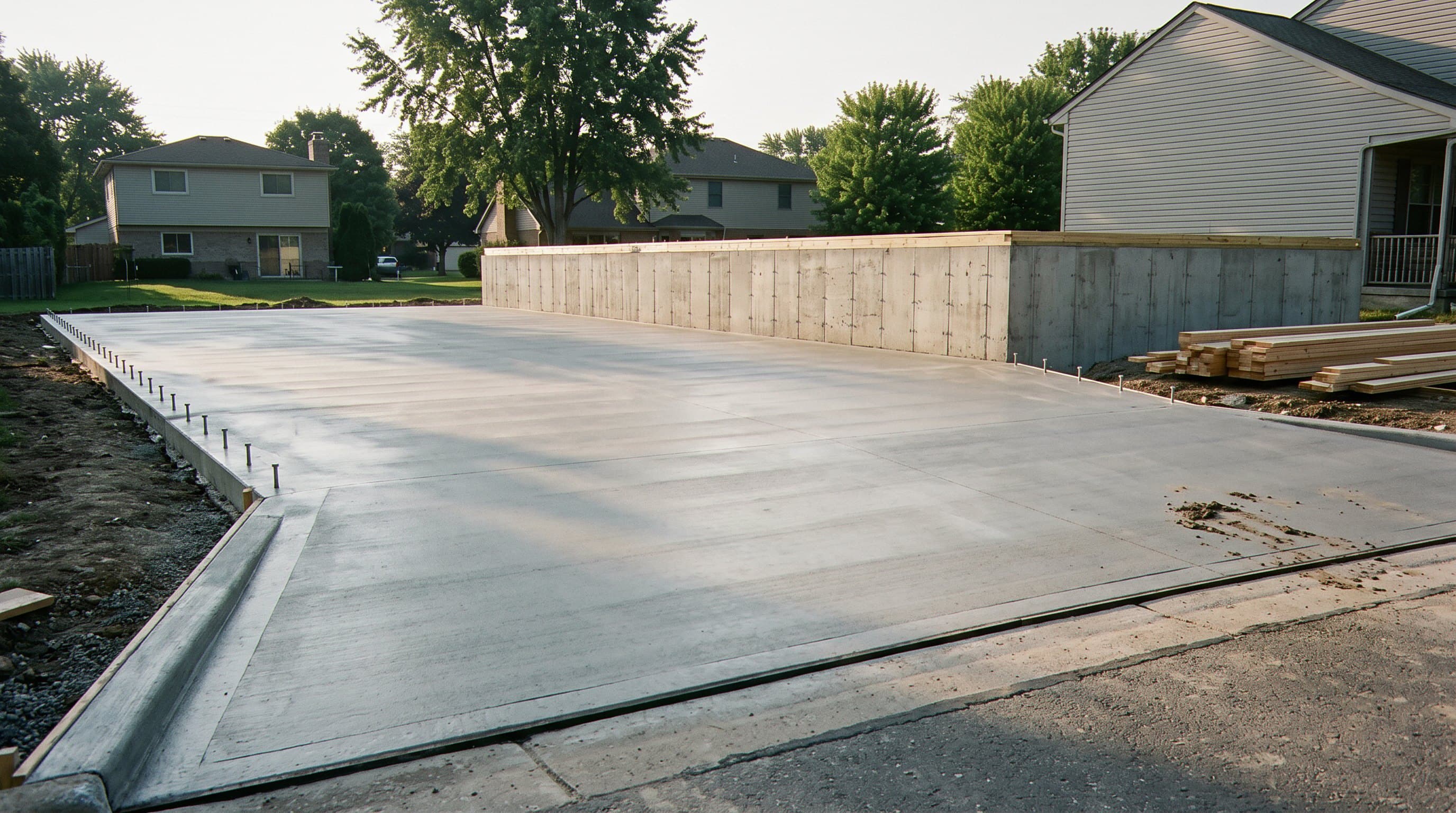
Foundation and Slab Work Built on a Base That Holds
A slab is only as good as what sits under it. So that is where our crew starts. Before we pour a single yard, we clear the loose topsoil, set the grade, and compact a clean stone base so the concrete rests on something firm. The soil around Dayton swells when it drinks up spring rain, then pulls back tight through a dry August, and a pad built on bare dirt rides that movement until it cracks. We build for the ground we actually have. We dig footings below the frost line so a hard Montgomery County winter cannot heave them, set steel where the load calls for it, and shape the site so water runs off and away from the pour. None of that shows once the concrete is down. All of it decides whether the slab stays flat or lifts at the corners.
Every slab we form gets that same care. It might carry a garage, a home addition, a shed, or a patio off the kitchen. We build the forms sturdy, check them level and square before any truck shows up, then lay the wire mesh or tie the rebar the job needs. We chair the steel up off the base so it sits down inside the concrete where it does its work. We plan the pour so the pad goes down in one run when the size allows, then screed it flat, float the surface, and tool the edges by hand. A thin pour on a rushed base looks fine the first year. By the third winter it starts to spider and crack. We would rather spend the extra hours getting the base right and hand you a slab that just sits there and does its job. Good prep is quiet work, and it is the part that lasts.
- We dig the footings below the frost line, so a hard winter cannot heave your slab or lift it at the corners.
- A compacted stone base and a true grade give the pad a firm, drained bed, so it sits flat and does not settle.
- We size the rebar or wire mesh to the real load, from a light shed pad to a slab that parks a truck.
- One continuous pour, plus control joints cut in the right spots, steers where any small crack lands.
- We form slabs for garages, home additions, sheds, and patios, and detail each one for the weight it carries.
Once the concrete is placed, the finish and the cure decide how long it holds. We cut control joints at the right spacing, tool clean edges, and keep the fresh pour damp so it cures slow and reaches full strength instead of flashing off in the sun. That patience matters. When you call us, you reach the crew that will be on your site, not a call desk stuck in the middle. We come out, measure the pad, and walk the base and drainage with you before you commit to anything. Then we give you a straight timeline. Say an old slab has already settled or cracked, and we look at it and tell you plainly whether a fresh pour or a repair is the smarter way to spend your money. Either way, you get a clear plan before any concrete is ordered.
Planning a garage, an addition, or a fresh slab anywhere around Dayton? Call our crew, and we will come measure the site, talk through the base and the pour in plain words, and get your foundation on the schedule.